Cloud services for managed infrastructure, hybrid environments, and business continuity

DartPoints helps organizations evaluate the right cloud model for their environment, whether that means multi-tenant cloud, hosted private cloud, hybrid cloud, or disaster recovery and business continuity services.


From VMware modernization to infrastructure consolidation, disaster recovery, and distributed operations, we help match the operating model, control level, connectivity path, and support approach to the workload.

Cloud services built for different operating models

DartPoints supports cloud requirements across four common paths, from shared managed environments to dedicated infrastructure, hybrid architectures, and business continuity strategies.
For organizations that want a managed cloud environment with flexibility, shared efficiency, and a simpler path to application hosting, infrastructure modernization, or cloud extension.
For organizations that need more control, more isolation, or a more tailored architecture for important workloads, virtualization platforms, compliance-sensitive environments, or specific operational requirements.
For organizations that need to connect private infrastructure, colocation, and public cloud into a practical operating model rather than forcing everything into one environment.
For organizations that need a cloud-based approach to disaster recovery, application recovery, or a secondary environment that helps restore critical systems and data when disruption occurs.
Disaster recovery can support a broader business continuity plan by helping restore the technology the business depends on.

What Matters in a Cloud Decision

A cloud decision is not only about where the workload runs. The right fit depends on the operating model, control requirements, migration path, business continuity requirements, connectivity, and how the environment will be supported over time.

Shared versus dedicated environment fit

VMware modernization and migration path

Multi-tenant versus private infrastructure requirements

Hybrid cloud architecture needs

Disaster Recovery & IT Continuity

Connectivity and cloud access requirements

Operational support and management expectations

Timeline, growth path, and deployment readiness

DartPoints helps customers determine fit quickly, so teams can move forward with a clear view of which cloud model makes sense, what it supports, and how it fits into a broader infrastructure strategy.
Not every workload belongs in a public cloud

Many organizations are re-evaluating where workloads should run.

DartPoints helps customers decide where multi-tenant cloud, hosted private cloud, hybrid infrastructure, and disaster recovery services fit best based on the workload, business priorities, and how the environment needs to operate.

DartPoints gives teams more flexibility to:

Common cloud use cases

VMware modernization

Modernize virtualization environments without forcing a rushed one-size-fits-all migration path.

Infrastructure consolidation

Reduce on-prem sprawl by moving appropriate workloads into managed cloud environments.

Hybrid cloud design

Connect private infrastructure, colocation, and public cloud into a more practical operating model.

Disaster recovery and continuity

Build secondary environments that support recovery objectives and reduce operational risk.

Application hosting

Support production, secondary, and business application workloads in a managed cloud environment.

Cloud-adjacent modernization

Keep some workloads private while connecting to public cloud services where they add value.

Connectivity that supports every cloud path

Cloud decisions often depend on how private infrastructure, public cloud platforms, business locations, and recovery environments connect.

DartPoints supports cloud connectivity as part of a broader Connectivity & Interconnection strategy. These capabilities can support multi-tenant cloud, hosted private cloud, hybrid cloud, disaster recovery, and distributed infrastructure environments. Cloud connectivity should be evaluated based on workload requirements, control needs, performance expectations, and deployment design.
Built on Nutanix for modern cloud infrastructure

DartPoints is building its cloud services on Nutanix to give customers a stronger path for modernization, control, and resiliency.

That matters for organizations rethinking VMware, planning around aging infrastructure, or trying to balance shared cloud efficiency with dedicated private cloud control. Nutanix strengthens the foundation for hosted private cloud, multi-tenant cloud, and resiliency-focused solutions, giving customers a more modern platform to support virtualization, recovery, and long-term infrastructure planning.
Nutanix-based foundation for hosted private cloud
A modern multi-tenant cloud platform built on Nutanix
Stronger support for modernization, resiliency, and virtualization strategy
A more practical path forward for organizations rethinking VMware

How Cloud Fits Into Your Infrastructure Strategy

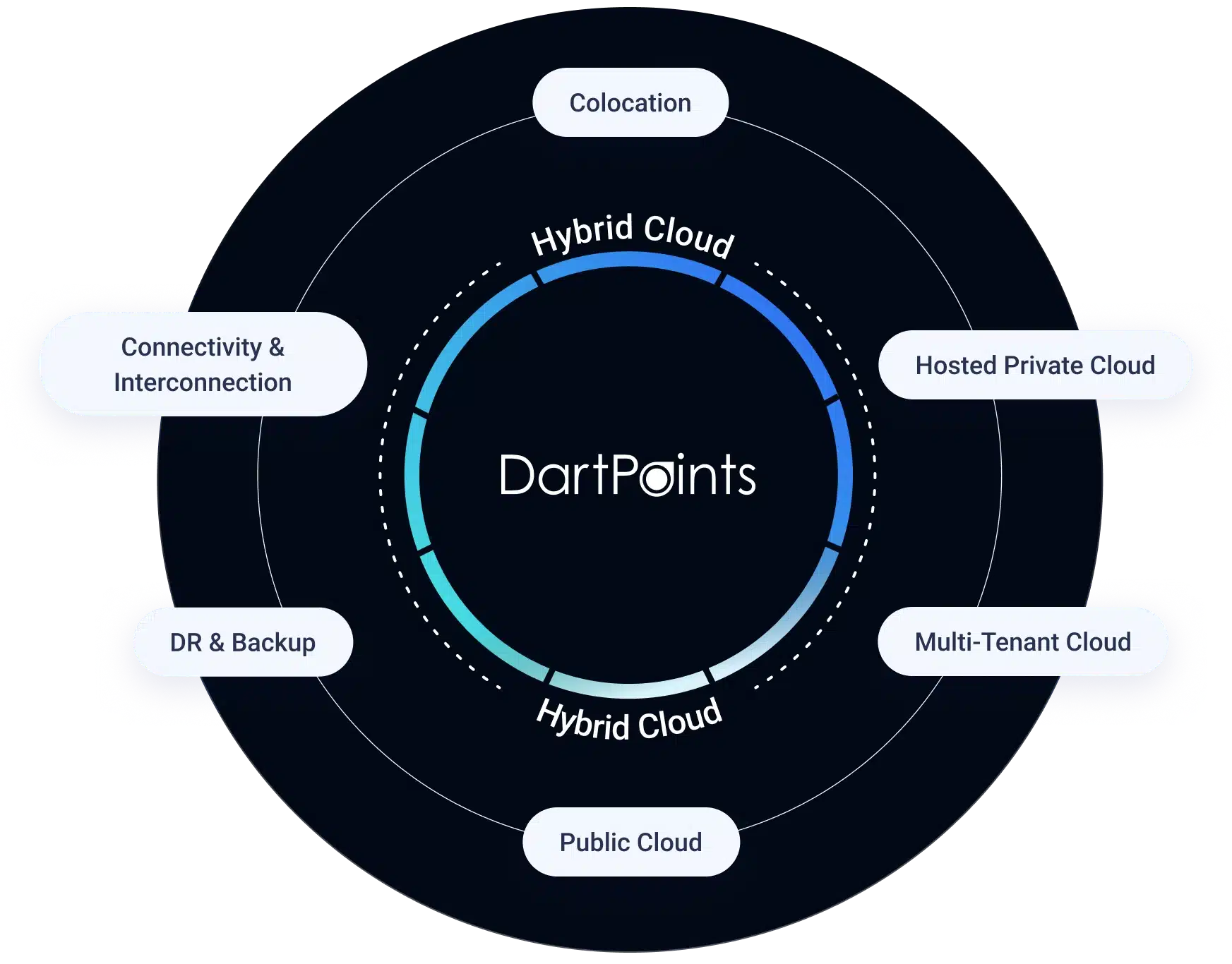
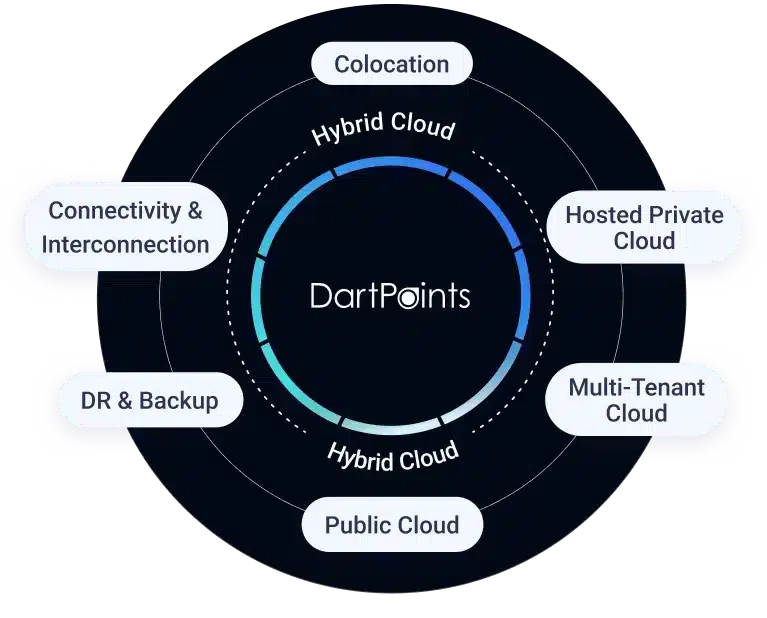
Most infrastructure environments span more than one model. DartPoints helps customers bring managed cloud, private infrastructure, colocation, disaster recovery, and connectivity together based on what each workload needs.

Built for critical cloud decisions

DartPoints supports customers with managed environments, regional infrastructure, operational support, connectivity options, and resiliency-aligned architectures where available.

Managed cloud and infrastructure support

Regional data center footprint

Hybrid and multi-site support

Connectivity and cloud access options

Disaster recovery and continuity alignment

Support for multi-tenant, private, and hybrid environments

Let’s talk about your cloud requirements

Whether you need a managed multi-tenant environment, hosted private cloud, a hybrid architecture, or a cloud resiliency strategy, DartPoints can help you evaluate the right model, connectivity path, and support approach for your environment.

Frequently Asked Questions

DartPoints supports multi-tenant cloud, hosted private cloud, hybrid cloud, and cloud resiliency options for organizations that need a managed infrastructure path aligned to workload fit, control requirements, and business objectives.
Multi-tenant cloud provides a shared managed cloud environment designed for flexibility and operational simplicity. Hosted private cloud provides dedicated infrastructure for teams that need more control, more isolation, or a more tailored architecture.
Hosted private cloud can be a better fit when workloads require more control, more architectural flexibility, specific performance requirements, stronger isolation, or a migration approach that does not fit a shared environment.
Hybrid cloud helps connect private infrastructure, colocation, and public cloud into a practical operating model. It can be a good fit when some workloads should remain private while others benefit from public cloud services.
VMware modernization is one of the common use cases DartPoints supports through managed cloud, hosted private cloud, hybrid architectures, and resiliency-focused solutions. As VMware costs rise, hardware ages, and IT environments become harder to manage, many organizations start looking for a better way forward. They need a simpler, more predictable infrastructure solution that reduces costs and supports long-term growth.
Cloud resiliency is a core part of the broader cloud story. DartPoints helps customers evaluate disaster recovery, business continuity, backup-aligned recovery paths, and secondary environments as part of a broader cloud strategy.
Yes. DartPoints is building its cloud services on Nutanix to support hosted private cloud, multi-tenant cloud, and disaster recovery as a service (DRaaS). For customers modernizing beyond VMware, Nutanix provides a stronger foundation for control, flexibility, and long-term infrastructure planning.
Cloud connectivity supports how private infrastructure, public cloud, business locations, and recovery environments connect. DartPoints addresses this through its broader Connectivity & Interconnection strategy, including Cloud Connectivity and related network services.
✕
Guidelines

File info
Format
File size
Resolution